









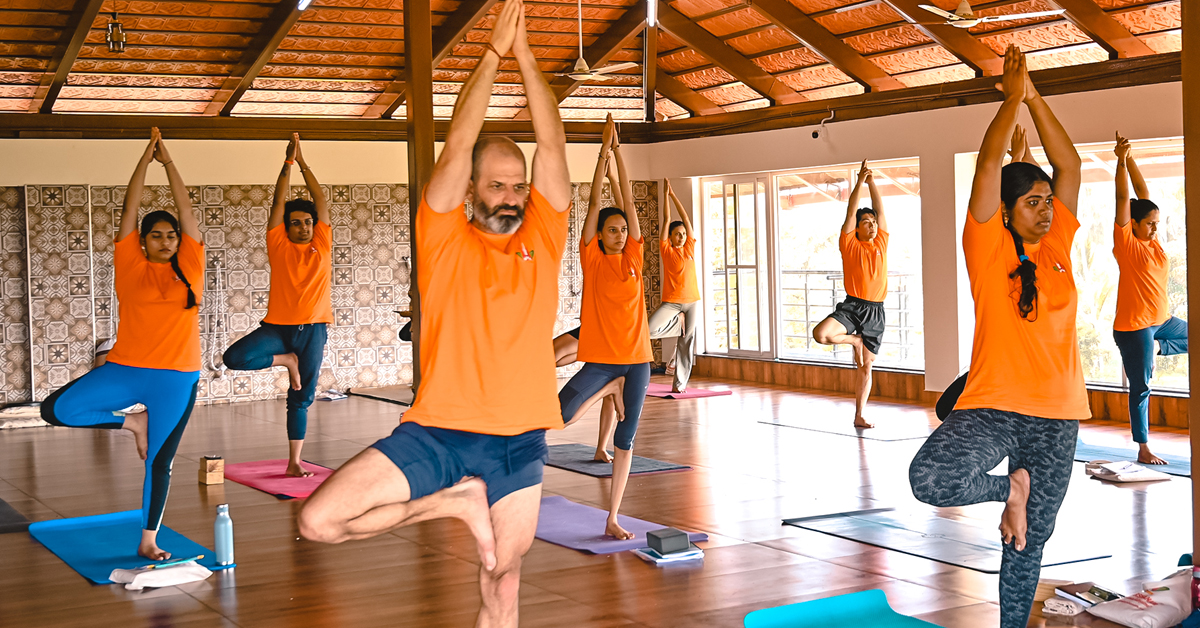
If you have decided to commit to a multi-week Yoga Teacher Training (TTC) or a deep spiritual immersion in India, you are about to step onto a path that has transformed lives for centuries. However, the moment you begin looking into where to go, you are faced with a major geographic and stylistic crossroads: Should you head north to Rishikesh, or south to Mysore?
Both of these legendary cities are considered global capitals of yoga, but they offer completely different training environments, lineages, and physical vibes. Choosing the wrong city can leave you feeling frustrated, out of place, and disconnected from your goals.
Whether you are looking for a gentle, spiritual path that focuses on the mind or a highly disciplined, physically demanding practice, this guide breaks down the core differences between Rishikesh and Mysore. This insider look will help you confidently choose the ideal setting for your unique yoga path.
The Landscape and Cultural Ecosystem
The choice between Rishikesh and Mysore is far more than a simple choice of climate; it dictates the everyday rhythm, view, and energy of your training experience.
Rishikesh: The Mountain Sanctuary of the Sages
Nestled in the foothills of the Himalayas in Uttarakhand, Rishikesh is where the emerald waters of the holy Ganga River flow down from the mountains. The air is filled with the scent of incense, the sound of temple bells, and distant Vedic chanting.
Life here revolves around traditional ashrams, riverside ghats (stone steps leading down to the river), and mountain trails. It is a strictly vegetarian and alcohol-free holy city, creating a natural, distraction-free environment that prompts your mind to slow down and reflect deeply.
Mysore (Mysuru): The Royal Heritage Hub of Discipline
Located in the southern state of Karnataka, Mysore is an elegant, cultured city famed for its grand palaces, aromatic sandalwood markets, and clean, tree-lined streets.
Unlike the mountain wilderness of Rishikesh, Mysore offers a more urban, heritage-focused environment. It is an intellectual and artistic hub where students live in quiet, artistic neighborhoods like Gokulam. Here, you will rent a private apartment, shop at local organic health food stores, and immerse yourself in a highly independent, self-disciplined lifestyle.
Lineage and Training Styles: Which Method Suits You?
The most critical factor in your decision should be the specific style of yoga and teaching methodology you want to master.
| Feature | Rishikesh (The Foothills) | Mysore (The South) |
| Primary Yoga Styles | Traditional Hatha, Vinyasa Flow, Kundalini, and Yin Yoga. | Ashtanga Vinyasa (The Mysore Style) and Iyengar Alignment. |
| Daily Class Focus | Holistic: Blending physical postures, detailed philosophy, chanting, and meditation. | Highly Physical: Intense, self-paced physical practice focused on sequencing and stamina. |
| Teaching Style | Lead-guided group classes with step-by-step vocal instructions. | Self-guided practice under individual teacher adjustments (Mysore Style). |
| Best Suited For | Beginners, spiritual seekers, and teachers wanting a varied, broad education. | Intermediate to advanced practitioners who love structure and intense physical work. |
A Typical Day in Training: Rishikesh vs. Mysore
To truly understand which city matches your style, let us look at the structure of a typical training day in each location.
Rishikesh: The Shared Ashram Structure
In Rishikesh, teacher training usually takes place within a fully contained ashram or a dedicated school campus. Your room, meals, and classes are all managed in one place, creating a close-knit, community-driven space.
Shatkarma & Pranayama
05:30 AM
Begin the day with traditional yogic nasal cleansing techniques (Neti), followed by deep, breath-control practices as the sun rises over the mountains.
Morning Posture Practice (Asana)
07:00 AM
A 90-minute, instructor-led Hatha or Vinyasa group class focusing on breath-linked movement and correct alignment.
Sattvic Breakfast
09:00 AM
A freshly prepared, organic, traditional vegetarian breakfast shared with your fellow classmates in the communal dining hall.
Philosophy & Anatomy Lectures
11:00 AM
Sit down for classroom sessions exploring the ancient wisdom of the Yoga Sutras, classic text analysis, and the functional mechanics of the human body.
Evening Practice & Meditation
04:30 PM
A gentle, cooling evening posture practice that winds down into deep, guided meditation or a celebratory Kirtan (musical chanting) session.
Mysore: The Independent Shala Structure
In Mysore, especially in the historic yoga hub of Gokulam, training follows an independent model. You line up your own accommodation and meals, and travel to your designated Shala (studio) for highly focused practice blocks.
Mysore-Style Self-Practice
05:00 AM
Step into a completely silent, warm studio room. You move through the strict Ashtanga series at your own breath-pace, receiving targeted, quiet physical adjustments from the master teacher.
Independent Breakfast Break
08:30 AM
Walk or ride a scooter to a local neighborhood café to connect with international students over fresh coconut water, fruit bowls, and South Indian idlis.
Chanting & Sanskrit Studies
11:30 AM
Gather at the studio for targeted study sessions focused on correct Sanskrit pronunciation, traditional mantra chanting, and historical philosophies.
Adjustment & Teaching Methodology
03:00 PM
A hands-on technical workshop where you break down the physics of postures, learning exactly how to safely adjust students’ alignment.
Practical Checklist for Making Your Final Decision
To ensure you choose the location that best serves your training goals, ask yourself these three clarifying questions.
1. What is My Current Level of Physical Conditioning?
If you are relatively new to yoga, or if you prefer a gentle, fluid practice that leaves plenty of room for mental rest, Rishikesh is your ideal home. It provides a supportive, accessible playground for all skill levels. Conversely, if you want to push your physical limits, love a hot, sweaty, daily workout, and can handle repeating intense sequences six days a week, Mysore is waiting for you.
2. Do I Want Community Care or Personal Independence?
Think about how you want to live during your training month. If you want the simplicity of a school handling your cooking, cleaning, and scheduling so you can focus entirely on your studies with a close-knit group, pick a Rishikesh ashram. If you value privacy, prefer to cook your own meals, and want to experience authentic everyday life in a South Indian city, choose Mysore.
3. What is My Target Teaching Philosophy?
Consider the type of teacher you want to become. If you want to guide varied, accessible public classes like gentle flows, corporate sessions, or meditative workshops, Rishikesh will give you a diverse, well-rounded toolkit. If you want to teach traditional, structured Ashtanga lineages and learn the delicate art of deep, hands-on physical adjustments, Mysore is the gold standard.
Just Saying
Did you know that both of these yoga capitals share a single, foundational ancestry? The modern practices taught in both Rishikesh and Mysore were largely popularized by the legendary master T. Krishnamacharya (often called the ‘Father of Modern Yoga’) during the early 20th century. He trained both B.K.S. Iyengar (who shaped alignment-focused Hatha) and K. Pattabhi Jois (who developed the intense Ashtanga method in Mysore), proving that all these paths are beautiful branches of the exact same tree!
The Final Word
Your decision between Rishikesh and Mysore isn’t about finding the “perfect” city—it is about finding the environment that resonates with your personal energy and intentions. Yoga is a deeply personal journey of self-discovery. Whether you find your inner focus watching the sunrise over the misty Himalayan peaks of Rishikesh, or through the disciplined rhythm of an Ashtanga studio in Mysore, India will challenge, inspire, and grow you in ways you never thought possible. Step away from your daily routine, trust your intuition, and embrace the transformative experience of training at the true source of yoga.
Disclaimer: The travel and training insights provided here are for informational and educational purposes. When booking a Yoga Teacher Training Course (TTC) in India, always check that the school is fully registered with Yoga Alliance, and consult with a travel medicine clinic regarding necessary immunizations for your chosen destination.