






When many people think of a dynamic yoga class, they picture fast-paced transitions, sweeping movements, and flowing sequences where you rarely hold a single position for more than a few seconds. While these styles are excellent for building cardiovascular endurance, they can sometimes cause students to gloss over subtle alignment errors. Repeating these minor alignment mistakes over time can accidentally reinforce bad posture habits, strain your joints, and lead to nagging injuries.
If you are looking for a practice that prioritizes structural perfection, anatomical balance, and deep therapeutic healing, look no further than Iyengar Yoga.
Founded by B.K.S. Iyengar in Pune, Maharashtra, this globally respected style approaches physical postures (Asanas) with the meticulous precision of an engineer. Instead of rushing through movements, Iyengar yoga focuses on holding postures for longer periods with absolute anatomical alignment. The defining characteristic of this practice is its revolutionary use of specialized props—including wooden blocks, buckled straps, bolsters, wall-mounted ropes, and backless metal chairs.
The Purpose of the Prop: Accessibility, Extensions, and Biofeedback
A common misconception among beginners is that using props is a sign of weakness or physical limitation. In an Iyengar studio, props are viewed as powerful tools of empowerment, education, and deep physical feedback.
1. Making Advanced Postures Instantly Accessible
Everyone’s skeletal structure, muscle density, and joint flexibility are unique. For example, if you have naturally tight hamstrings, keeping your spine straight while reaching for your toes in a standing forward bend can be anatomically impossible. By placing two wooden blocks under your hands, you effectively “bring the floor up to you.” This minor adjustment allows you to keep your legs straight and your spine fully extended, letting you experience the true benefits of the posture without straining your lower back.
2. Extending Your Safe Hold Times
Holding a posture for two to five minutes allows your muscles to completely relax, lengthening your deep connective tissues (fascia). However, holding a heavy, demanding pose manually can cause your muscles to fatigue and shake, compromising your alignment. Using a prop—like resting your pelvis on a firm bolster during a bridge pose—safely supports your body weight. This support allows you to hold the shape comfortably for minutes, giving your tight muscle layers the time they need to safely release long-held tension.
3. Providing Immediate Biomechanical Feedback
Props act as a neutral, honest mirror for your body’s hidden misalignments. When you press your back flat against a solid wall while practicing a standing triangle pose (Trikonasana), the wall gives you instant, physical feedback. If one shoulder blade or hip lifts away from the wall, you immediately know that your torso is twisting or slumping forward. This direct feedback loops into your nervous system, teaching your brain exactly how it feels to stand in perfect alignment.
Three Essential Iyengar Poses & How to Prop Them
Here is a breakdown of how common props can transform three classic postures from stressful balancing acts into deeply aligned, therapeutic stretches.
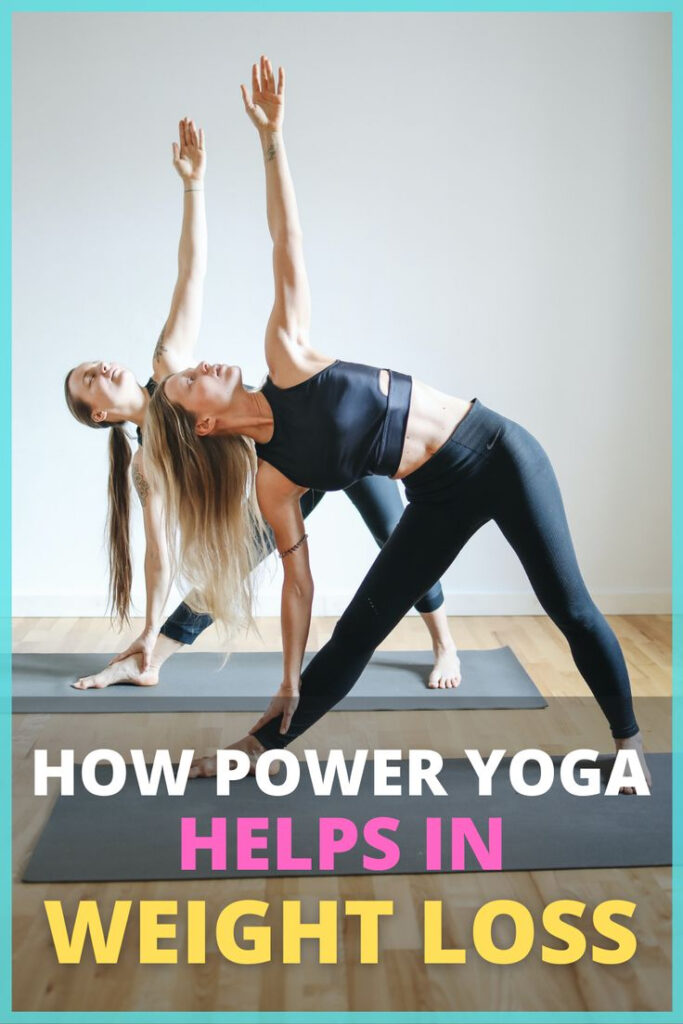
1. The Supported Triangle Pose (Utthita Trikonasana)
- The Common Flaw: Slumping your chest toward the floor and rounding your spine just to force your lower hand down to touch your ankle or the mat.
- The Iyengar Setup: Place a tall wooden or foam block flat on the floor directly behind your front ankle. Rest your lower hand firmly on top of the block.
- The Result: The extra height instantly lifts your torso, allowing you to roll your chest wide open, stack your shoulders perfectly on top of each other, and keep both sides of your waist long and decompressed.
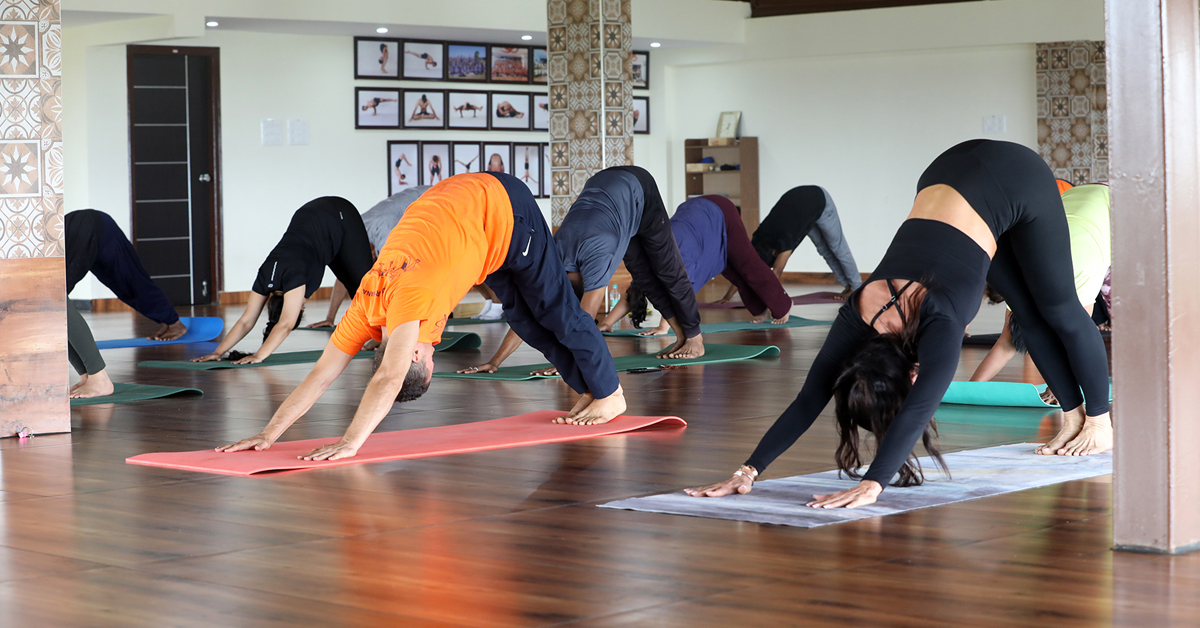
2. The Assisted Downward-Facing Dog (Adho Mukha Svanasana)
- The Common Flaw: Tensing your neck muscles, shrugging your shoulders into your ears, and dealing with slipping hands on the mat.
- The Iyengar Setup: Loop a thick cotton yoga strap around your upper arms just above your elbows, adjusting the buckle so the strap is shoulder-width wide.
- The Result: As you push your arms outward against the firm resistance of the strap, your outer shoulder blades naturally rotate outward. This movement creates massive physical space around your neck, instantly relieving upper back tension and stabilizing your wrist joints.
3. The Rejuvenating Legs-Up-The-Wall Pose (Viparita Karani)
- The Common Flaw: Allowing your lower back to flatten completely against the hard floor, which can cause a dull ache in your lumbar spine over time.
- The Iyengar Setup: Place a firm, rectangular yoga bolster parallel to a solid wall, leaving a small 3-inch gap. Sit sideways on the bolster, swing your legs straight up the wall, and lower your shoulders flat onto the floor. Your pelvis should rest comfortably on the bolster while your tailbone drops slightly into the gap.
- The Result: The bolster gently supports the natural forward curve of your lower back, while gravity drains pooled fluid from your legs, soothing your nervous system and promoting deep sleep.
Guidelines for Building a Safe Home Prop Practice
To get the most out of your home prop practice without risking joint strain or losing your balance, keep these three guidelines in mind.
1. Invest in Firm, High-Quality Equipment
When shopping for yoga props, choose firmness over softness. Soft, squishy foam blocks or flimsy pillows will compress under your weight, making your poses feel unstable. Opt for solid, heavy cork or dense wooden blocks, thick woven cotton straps with metal buckles, and dense, tightly stuffed cotton or buckwheat bolsters that can hold your body weight without flattening out.
2. Never Use Props to Force an Unnatural Stretch
Props are meant to provide safe support and stability, not to act as levers to force your joints into positions they aren’t ready for. For example, do not pull aggressively on a yoga strap to yank your torso down into a seated forward bend. Instead, hold the strap with a relaxed grip and use it simply to keep your spine long and straight as your breath coaxes your muscles to soften naturally.
3. Practice Mindful Improvization at Home
If you are practicing at home and do not own a collection of professional yoga props, you can easily use common household items as effective substitutes. Use a thick, tightly rolled-up bath blanket instead of a bolster, a sturdy hardcover book instead of a block, or the woven belt from a bathrobe instead of a cotton yoga strap. Just ensure your improvised setups are stable and secure before resting your full weight on them.
Just Saying
Did you know that B.K.S. Iyengar’s decision to invent yoga props was born directly out of personal necessity and empathy for his students? As a child in Karnataka, he suffered from severe bouts of malaria, tuberculosis, and typhoid, which left his body weak and stiff. When he began teaching, he noticed that many of his students struggled with the classic, rigid shapes of traditional postures. He began experimenting with ordinary household items—like old bricks, wooden logs, and storage boxes—to give their bodies the exact structural support they needed to heal safely!
The Final Word
True progression in your yoga practice isn’t measured by how close your nose can touch your knees or whether you can twist your body into an advanced shape; it is found in the deep, quiet precision of your alignment and your focus. Your body is a beautiful architectural structure that functions best when all its joints, bones, and muscles are balanced. Iyengar yoga teaches us to drop our egos at the edge of the mat and use props as supportive tools for self-discovery and recovery. By taking the time to realign your body with patience, care, and precision, you unlock a steady sense of inner peace and long-term vitality. Step away from the pressure of rushing through your workouts. Embrace the mindful structure of precise alignment, and enjoy the lasting comfort, strength, and confidence that comes with finding your perfect fit.
Disclaimer: The anatomical and alignment insights shared in this article are intended strictly for educational and informational purposes. If you are recovering from a recent spinal injury, joint dislocation, or chronic disc herniation, always consult with a qualified physical therapist or certified Iyengar yoga instructor before incorporating props or holding advanced postures at home.